
Roll Film Factory: Preserving the Magic of Analog Photography in a Digital World
2026-06-19
In an era where digital convenience reigns, there’s a quiet revolution happening—the revival of film photography. Roll Film Factory stands at the heart of this movement, championing the tactile magic that only analog can deliver. From the click of the shutter to the anticipation of development, every frame tells a story untouched by pixels. At Kody, we share this passion, believing that real moments deserve a medium that breathes. This post explores how the factory keeps the art alive, why it matters more than ever, and what you can discover along the way. Step back into the grain and embrace the imperfect beauty that digital perfection forgot.
The Soul of Film in a Pixel-Obsessed Era
There is a quiet vanishing act happening in modern cinema. As each new camera promises more resolution, sharper edges, and a broader spectrum of color, something less quantifiable drifts away. The soul of a film was never about perfect pixels or flawless frames—it lived in the grain, the accidental light leak, the way a lens chose not to see everything clearly. Today’s images are pristine, almost clinical, but they can feel like a beautifully furnished room where nobody actually lives.
What we mistake for progress is often just a shift in obsession. Early filmmakers wrestled with the mystery of capturing a fleeting expression, not with pixel counts. The emotional weight of a close-up came from its rarity and curation, not from seeing every skin pore in unforgiving detail. When pixels become the benchmark, we risk forgetting that cinema is meant to be a meeting place for ghosts, not a window into a laboratory. The best films always carry a residue of the unrepeatable—a glance, a stumble, a wayward shadow—things that no amount of data can replicate.
From Darkroom Alchemy to Modern Mastery
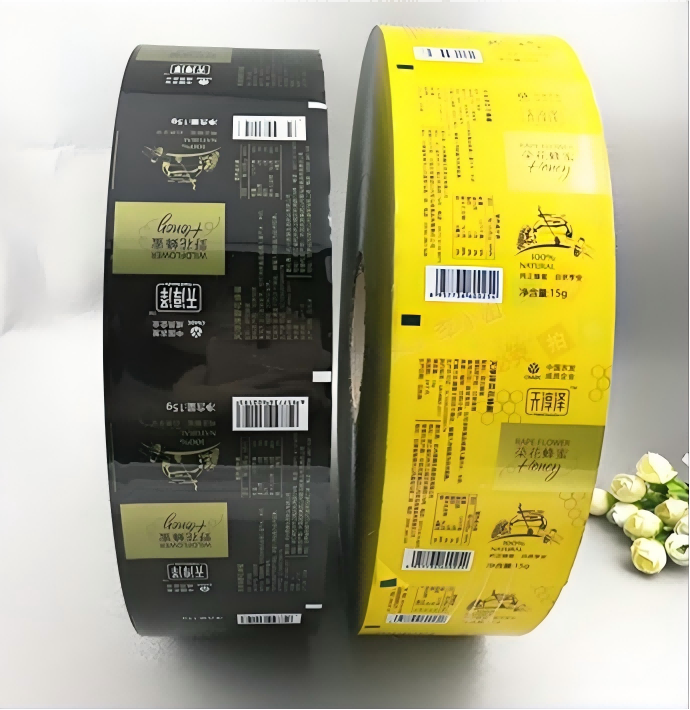
There was a time when a photograph was not an instant of data but a slow, deliberate act of transformation. Under safe light, exposed paper awaited its fate in trays of developer, stop bath, and fixer—each chemical bringing a latent image to life like a specter materializing. The darkroom was less a laboratory and more a crucible, where patience and craft transmuted silver halides into enduring art. Mistakes were tangible, but so was the thrill of watching a print emerge beneath tongs and siphons.
Today, the tools have shifted from enlargers to editing suites, from chemical gradients to digital sliders. But mastery hasn't dissolved into filters and presets; it's simply taken a new shape. The modern photographer still grapples with dynamic range, color balance, and the intangible quality that separates a snapshot from a photograph worth framing. The promise of technology has democratized the craft, yet the finest work still hinges on an almost obsessive attention to detail—a lineage traceable straight back to those who could read a negative by touch in a dim room.
In many ways, the core of photography remains unchanged. Whether in a darkroom or behind a screen, the pursuit is of light and the story it tells. The alchemy isn't gone; it's been internalized, no longer chemical but intellectual. Mastering the art now means navigating an overwhelming sea of possibility without losing the intentionality that made those early prints so haunting. The magic persists, just differently calibrated.
Why Grain Beats Perfection Every Time
Perfection often feels sterile—lacking soul and warmth. Grain, whether in wood, photography, or sound, adds a layer of authenticity that no polished surface can replicate. It tells a story of time, environment, and process, inviting us to appreciate the imperfect moments that actually feel real.
Think about a handcrafted wooden table. The knots and whorls aren’t flaws; they’re a fingerprint of the tree’s life. The same holds true for analog film, where grain gives texture to memories, making them feel tangible rather than digitally sanitized. That subtle irregularity draws the eye and holds attention because it’s inherently human.
Embracing grain is a quiet rebellion against mass-produced sameness. It’s choosing character over conformity, and depth over disposable aesthetics. After all, what we remember and cherish most rarely comes from a flawless mold—it’s the unique markings that make an experience truly unforgettable.
Curating a Community of Celluloid Dreamers
There’s nothing quite like the quiet hush of a roomful of strangers, all leaning into the same flicker of light. This community started as a handful of folks who couldn’t stop talking about the films that kept them up at night—the grainy, the gorgeous, the forgotten. It’s less a club and more a shared obsession, a place where celluloid dreams still matter.
Curating here isn’t about algorithms or what’s trending. It’s about digging through crates at a flea market, remembering a line of dialogue that haunted you for years, and saying, “You have to see this.” Every screening, every conversation thread, is chosen with a bit of gut feeling and a lot of love—no pretense, just the raw connection to stories told on film.
What binds us isn’t just taste; it’s the willingness to be moved. We gather around the impractical magic of projected light because it reminds us that imagination, like film, is fragile and fleeting. This is a corner for those who still believe in the power of a well-worn print and the community that forms in the dark.
The Secret Life of a Roll: Stories Told in 36 Frames
In the analog dance of light and emulsion, every roll of 36 frames is a pocket-sized anthology. It begins as a blank slate, a coiled ribbon of possibility tucked into the metal canister. You load it in a dimly lit room or a hurried moment on the street, and from that instant, the clock starts ticking—not of time, but of decisions. Each click of the shutter is a commitment, a deliberate choice to capture something fleeting: a slant of afternoon light across a stranger’s face, the cluttered quiet of a kitchen after a party, or the way a friend’s laughter cracks wide open. There’s no screen to review, no instant gratification. Just the soft mechanical whisper and the faith that something real landed on the sensitive strip inside.
Later, in the solitude of the darkroom or the anticipation of the lab’s return, those latent images become something else—a secret history. The roll, now a witness, holds not just exposures but the invisible weight of what was felt between the frames. Frame 7 might be a failed attempt at a landscape, blurred by a sudden gust; frame 23 could be an accidental self-portrait, half shadow and half squint. Together, they form a nonlinear diary, a string of moments that refuse to be erased. And when the negatives are finally held up to the light, they whisper the quiet truth: you didn’t just take pictures; you archived a version of yourself that existed only in those 36 choices.
Keeping the Analog Flame Alive for Future Shutterbugs
There's something undeniably tactile about loading a roll of film, hearing the satisfying click of the advance lever, and the quiet anticipation of waiting for prints to return from the lab. It’s a ritual that digital cameras can’t replicate, and one that young photographers are discovering with fresh eyes. When you hand a teenager a fully manual SLR and explain that they have only 24 or 36 frames to tell a story, their entire approach to composing an image shifts. Suddenly, every shot matters. They begin to learn patience, to study light and shadow in ways that an LCD screen’s instant feedback often erodes.
Communities are springing up around this renewed curiosity—darkroom co-ops, film-swap clubs, and weekend photo walks that celebrate the unpredictability of analog. Old-timers who never ditched their FM2s or AE-1s are now playing mentor, sharing tricks on pushing Tri-X or explaining the magic of a properly timed dodge-and-burn. It’s a quiet rebellion against the perfection of megapixels and AI-enhanced imagery, a conscious choice to embrace the grain and the imperfections that make each frame uniquely human.
For the next generation, keeping this flame alive isn’t just about nostalgia—it’s about slowing down in a world that rarely pauses. When a young shutterbug develops their first roll and sees an image emerge in the developer tray, there’s a spark of wonder that no screen can imitate. That spark is what ensures film will stick around, not as a relic, but as a living, breathing medium that still has stories to tell.
FAQ
Our goal is to keep the soul of analog photography alive by offering a space where film enthusiasts can shoot, develop, and print their work in a community-driven environment.
We provide access to darkroom equipment, film processing services, and workshops that teach both beginners and experienced shooters the craft of analog photography.
Analog photography forces you to slow down and be intentional with each frame. The grain, the imperfections, and the surprise of developing film create a tangible magic that digital can't replicate.
We host hands-on sessions covering everything from film loading and camera mechanics to darkroom printing techniques, often led by photographers with decades of real-world experience.
Absolutely. You can use our self-service lab or drop off your rolls for professional processing. We handle color negative, black and white, and even slide film.
We're not just a service; we're a hub for creativity. Members can borrow vintage cameras, participate in photo walks, and exhibit their work in our gallery space.
Conclusion
In a world obsessed with instant, flawless digital imagery, Roll Film Factory champions the imperfect beauty of grain and the deliberate pace of analog processes. There’s a soulful rhythm to winding a spool, composing through a viewfinder without a screen’s distractions, and surrendering to the surprise of developed negatives. That grain—often dismissed as noise—embodies texture, mood, and authenticity that sterile pixels can’t replicate. Each 36-frame roll becomes a curated narrative, a secret life captured in fleeting moments that force photographers to slow down and truly see. The factory isn’t just preserving a medium; it’s safeguarding a way of seeing that values emotion over technical perfection.
From the alchemy of the darkroom—where chemicals and light conspire to reveal hidden images—to modern mastery of analog techniques, Roll Film Factory keeps this heritage accessible. They cultivate a community of celluloid dreamers who swap tips, share experiments with expired film stocks, and celebrate happy accidents. For newcomers, the factory is a bridge: it fuels the curiosity of future shutterbugs by demystifying processes that can feel arcane. By championing workshops, fostering connections, and ensuring that film stocks remain available, they’re passing the torch. The analog flame doesn’t just survive; it thrives, burning brighter with every frame that carries a story.
Contact Us
Contact Person: Cindy Lee
Email: [email protected]
Tel/WhatsApp: 8613622669331
Website: https://www.dgkody.com