
Inside a Leading Capsule Slip Ring Factory: Innovation in Compact Rotary Connections
2026-08-08
Discover how MOFLON is redefining compact rotary connections. Inside their cutting-edge capsule slip ring factory, precision engineering meets relentless innovation, enabling seamless power and data transmission in the tightest spaces. This behind-the-scenes look reveals the processes that set new industry standards.
How Leading Factories Push the Limits of Capsule Slip Ring Design
Leading factories are redefining what capsule slip rings can achieve by integrating advanced materials and precision engineering. They utilize ultra-thin gold alloy contacts and laser-welded terminations to reduce resistance and extend service life, even under continuous rotation at high speeds. These innovations allow for compact designs that maintain signal integrity across a wide temperature range, making them indispensable in robotics, medical devices, and aerospace applications where space is at a premium.
Another frontier is the elimination of wear particles and electrical noise. By adopting liquid metal or fiber brush technologies, top manufacturers are pushing reliability beyond traditional limits, ensuring maintenance-free operation for millions of revolutions. Meanwhile, the integration of hybrid modules—combining power, RF, and data channels within a single capsule—requires meticulous electromagnetic shielding and insulation coordination, a balancing act that only the most experienced engineers can pull off consistently.
The Hidden Precision Behind Compact Rotary Connections
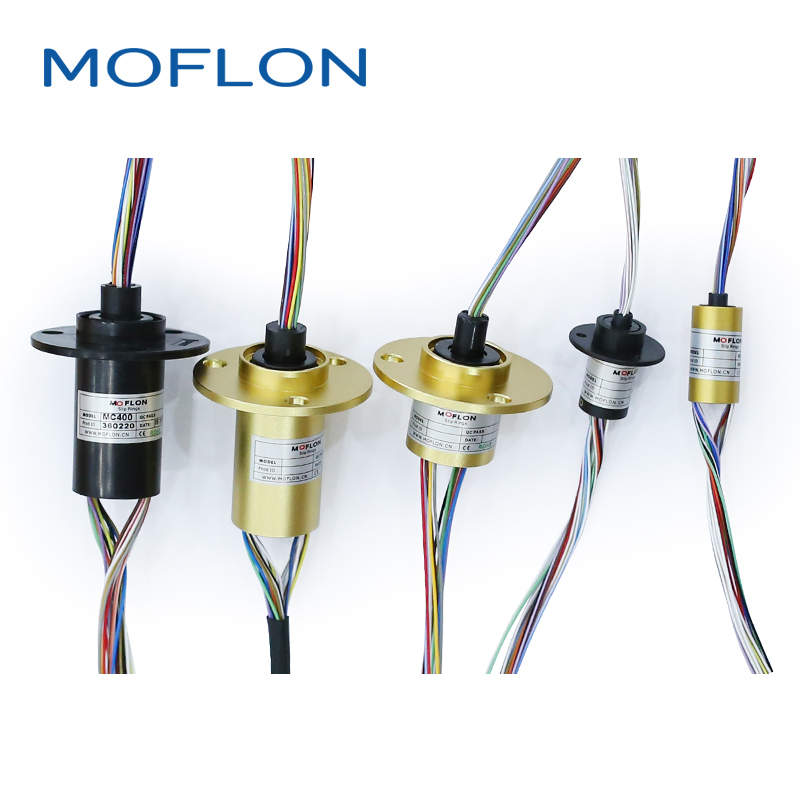
When space is at a premium, engineers often turn to compact rotary connections, but their small size belies an extraordinary level of precision engineering. These components are meticulously designed to transmit fluids, gases, or electrical signals across rotating interfaces without leakage or signal loss, all within a confined envelope. The hidden precision lies in the micro-tolerances of the sealing surfaces, the carefully calculated bearing preloads, and the material pairings that ensure longevity despite constant motion.
Achieving this precision requires manufacturing techniques that go beyond standard CNC machining. Advanced grinding and lapping processes bring sealing faces to mirror-like finishes, measured in millionths of an inch. Simultaneously, assembly must occur in cleanroom conditions to prevent even a speck of dust from compromising the seal. Every unit undergoes rigorous testing, often including helium leak detection and rotational torque profiling, to verify that the internal clearances and alignment meet exacting standards.
What sets apart truly exceptional compact rotary connections is the integration of multiple functions into a single, miniature assembly. Designers might combine fluid passages with fiber-optic rotary joints or integrate slip rings for power and data, all while maintaining isolation between channels. This miniaturized complexity relies on advanced simulation tools to predict thermal expansion, vibration, and wear patterns, ensuring that the connection performs flawlessly in demanding applications such as surgical robotics or aerospace positioning systems.
Custom Engineering: When Standard Slip Rings Aren’t Enough
Off-the-shelf slip rings handle many tasks, but demanding environments often expose their limits. Extreme temperatures, tight spaces, or unconventional signal mixes can quickly render a catalog component useless. Instead of forcing a square peg into a round hole, custom engineering steps in to match the exact mechanical and electrical blueprint. It’s about rethinking every element—from contact materials and plating thickness to brush tension and wire routing—so the final assembly fits perfectly and lasts longer.
Beyond basic power and data, specialty applications call for hybrid designs that combine Ethernet, fiber optics, fluid channels, or even harsh-environment shielding within a single rotating joint. These tailored solutions are born from close collaboration: you define the operational pressures, and the engineering team translates them into a rugged, compact, and maintainable package. The result isn’t just a part—it’s a seamless extension of the equipment that saves space, cuts assembly time, and eliminates workarounds.
Prototype testing and iterative refinement are built into the process, not afterthoughts. Real-world simulations verify signal integrity, thermal behavior, and wear patterns long before deployment. When failure isn’t an option—whether in medical robotics, offshore drilling, or radar systems—that level of bespoke attention turns a risk into a reliable advantage. Standard slip rings work for standard jobs; everything else deserves a conversation about what’s possible.
Inside the Assembly Line Where Miniaturization Meets Durability
On the factory floor, robots no larger than a shoebox place capacitors onto circuit boards with a delicacy that seems almost human. Each movement is calculated down to the micron, yet the components being handled are tougher than they appear—engineered to survive drops, vibrations, and years of constant use. This is where the art of making things smaller collides with the demand for resilience, a balance that defines every step of the process.
Engineers here speak of ‘micro-stress testing’ as casually as others discuss the weather. A smartphone board, barely thicker than a fingernail, undergoes thermal shocks from -40°C to 85°C in seconds, not to see if it fails, but to confirm its stubborn refusal to do so. Soldering techniques have evolved from simple heat application to precise laser bonding, ensuring that even the tiniest joints can withstand the torsion of daily life. The result is a contradiction in physical form: lightweight, compact, and nearly indestructible.
What truly sets this assembly line apart isn’t just the machinery, but the mindset. Every worker, from the technician calibrating lens modules to the quality inspector scanning for microscopic cracks, knows that durability isn’t a final coat—it’s embedded at the molecular level. Materials are chosen not for ease of manufacture, but for their ability to age gracefully under stress. In this quiet, antiseptic space, miniaturization doesn’t mean fragility; it means freedom to build things that can go anywhere and last longer than we expect.
Why Ultra-Compact Slip Rings Are Transforming Modern Devices
In an era where devices shrink yet demand more functionality, ultra-compact slip rings have emerged as a quiet enabler of innovation. Traditional slip rings, once bulky and power-hungry, now fit comfortably into spaces no larger than a coin, yet they reliably transmit power, data, and even high-frequency signals across rotating interfaces. This miniaturization isn’t merely about saving space—it's about unlocking design possibilities that were previously off-limits. From medical robotics to consumer wearables, the ability to integrate seamless 360° rotation without compromising performance has become a competitive edge, allowing engineers to reimagine how compact systems move and communicate.
The transformation goes beyond physical size. These tiny rotary joints now incorporate advanced material science and precision manufacturing techniques that drastically reduce electrical noise and wear. Gold-on-gold contacts, fiber brush technology, and modular designs allow for maintenance-free operation over millions of revolutions, even in harsh environments. As a result, devices like surgical cameras, miniature pan-tilt units, and drone gimbals can operate with absolute reliability, while manufacturers enjoy simplified assembly and longer product lifespans. The shift toward ultra-compact formats also aligns with the broader trend of untethered, portable technology—where every gram and millimeter counts, and performance cannot be sacrificed.
Perhaps the most striking impact is on emerging fields like augmented reality eyewear and micro-satellite mechanisms, where ultra-compact slip rings enable dynamic movement in impossibly tight confines. By delivering consistent signal integrity without the limitations of wireless alternatives, they help bridge the gap between mechanical motion and high-speed data transfer. Designers are no longer forced to choose between rotation and reliability, and this newfound freedom is accelerating product development in sectors ranging from autonomous vehicles to smart home gadgets. In many ways, these unassuming components are redefining the boundaries of what’s achievable in modern device architecture, one silent revolution at a time.
From Prototype to Production: A Look at Quality-Driven Manufacturing
Moving from a rough prototype to a polished, production-ready item is rarely a straight line. Successful manufacturers treat this transition as a deliberate process, not just a mechanical scale-up. It starts with dissecting the prototype not only for what works, but for what could quietly fail under real-world stress. Every joint, material choice, and assembly step gets scrutinized through the lens of long-term reliability, not just short-term function.
This phase often reveals hidden friction points—tolerances that drift slightly with temperature, a finish that looks good but wears poorly, or a clever design that’s simply too costly to build consistently. Rather than patching these issues later, quality-driven teams embed fixes directly into the production blueprint. They lean on cross-functional collaboration, bringing together engineers, line operators, and suppliers to refine the design for manufacturability without diluting its core purpose.
What emerges is a product that holds its integrity at scale. The true mark of this approach is not just a batch that passes inspection, but a process that inherently prevents drift. By the time production lines are running at full speed, the transition has already absorbed its lessons—so the end result feels inevitable, even though it required countless careful choices along the way.
FAQ
Capsule slip rings pack reliable power and signal transfer into tiny footprints, letting engineers fit rotary connections into tight spaces that bulkier options can't touch.
Instead of sticking to off-the-shelf specs, they lean heavily on custom winding techniques and advanced contact materials to boost current density while shrinking overall diameter.
Beyond obvious places like medical CT scanners and robotic arms, they quietly show up in wind turbine pitch controls and pan-tilt security cameras where every millimeter counts.
The gold-on-gold contact system isn't just marketing fluff — it directly impacts signal noise during high-speed rotation and can mean the difference between clean data and intermittent failures.
It's surprisingly hands-on: engineers often 3D-print housing mockups overnight, test brush tension with bespoke jigs, and cycle samples for days straight to catch wear patterns early.
By embedding fiber channels alongside traditional copper rings, one capsule can now handle gigabit Ethernet feeds and low-level analog signals simultaneously without crosstalk headaches.
Many assume it's all about rotating speed, but in practice, proper lubrication intervals and debris sealing often extend service life more than simply picking a higher RPM rating.
Conclusion
Inside a leading capsule slip ring factory, innovation is embedded in every stage of design and production. Engineers continuously push the boundaries of compact rotary connections, refining geometries and material choices to achieve signal clarity and power delivery in spaces once considered impossible. The hidden precision behind these components is astonishing: contact elements are machined to sub-micron tolerances, and proprietary brush block arrangements minimize electrical noise while extending service life. When standard catalog parts can’t meet the demand, the factory’s custom engineering group reimagines the slip ring from the ground up—developing specialized configurations for medical robotics, defense turrets, and high-vibration industrial machinery. These tailored solutions often involve hybrid signal pathways, integrated fluidic channels, or shielding against extreme electromagnetic interference, demonstrating how bespoke design overcomes limitations that off-the-shelf products cannot.
On the assembly floor, the marriage of miniaturization and durability becomes tangible. Automated stations delicately handle gold-plated ring stacks and hair-thin fiber brushes, while laser welding ensures bond integrity without compromising clearance. The resulting ultra-compact slip rings are catalysts in modern device evolution, enabling uninterrupted 360° rotation in next-generation endoscopes, lidar sensors, and dexterous cobot arms where every millimeter matters. From initial prototype to mass production, a quality-driven mindset prevails: each unit undergoes dynamic life testing, insertion loss measurement, and environmental stress screening. This rigorous validation, combined with real-time statistical process control, guarantees that even the smallest rotary joint will perform reliably over millions of revolutions, solidifying the factory’s reputation for turning intricate concepts into dependable, miniature motion solutions.
Contact Us
Contact Person: Xiangpin Li
Email: [email protected]
Tel/WhatsApp: 86 186 1706 8578
Website: https://www.moflon.com